Whitening
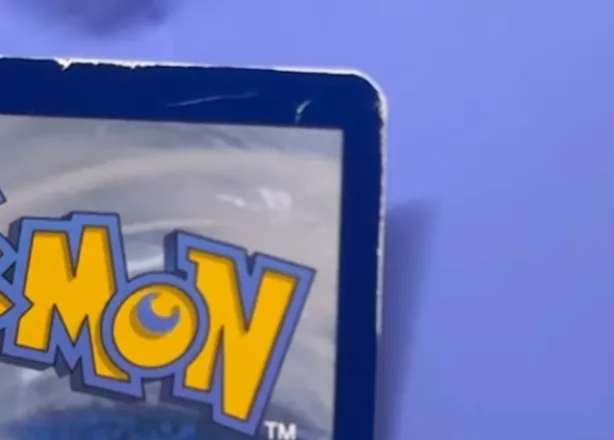
Not fixableThe one damage type on this page that gets a straight no. Those white flecks along the back edges and corners are spots where the printed ink layer has been torn or worn away, exposing the raw white card stock underneath.
Why it can't be fixed: the ink in those spots is physically gone, and no honest process can regenerate a printed layer that no longer exists. Every other repair here works because the card's original material is still present. A card with whitening can still have everything else treated; the whitening itself simply stays, and your assessment will say so plainly.
Corner Lift
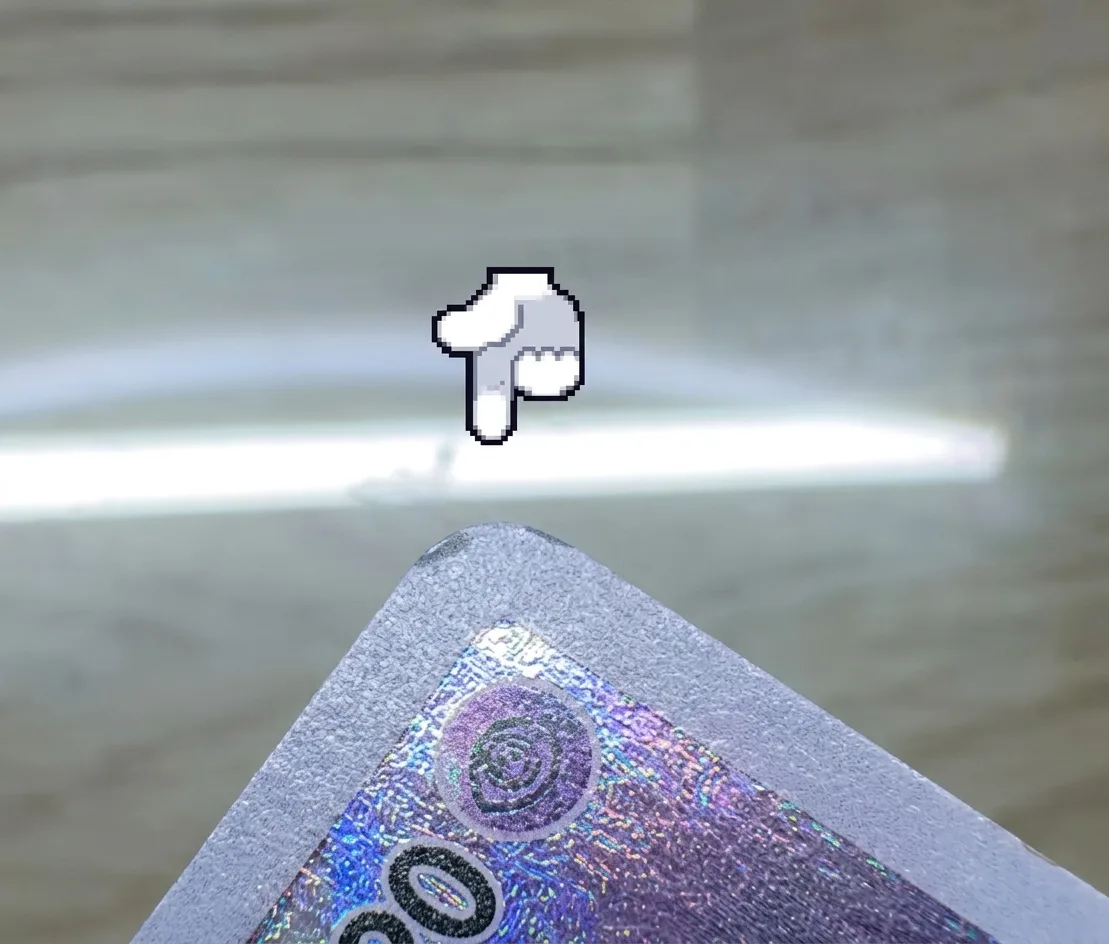
Usually very fixableTrading cards are made of layers of paper stock pressed together. A corner lift is when those layers start separating at a corner. You'll see the corner "feathering" open or a whitish split when viewed from the side.
How it happens: shuffling without sleeves, moisture, pocket wear, or just decades of handling on vintage cards.
Edge Lift
Usually very fixableThe same layer separation as a corner lift, but running along an edge of the card instead of at a corner. Left alone it tends to spread, so it's worth addressing early.
How it happens: moisture exposure, tight sleeves dragging on the edge, or repeated insertion into binders and boxes.
Crease
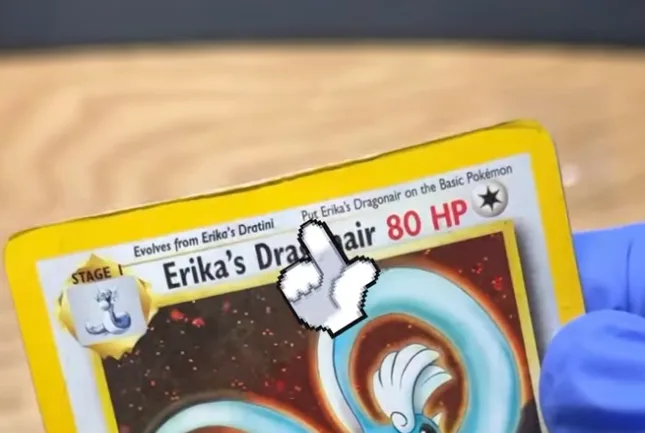
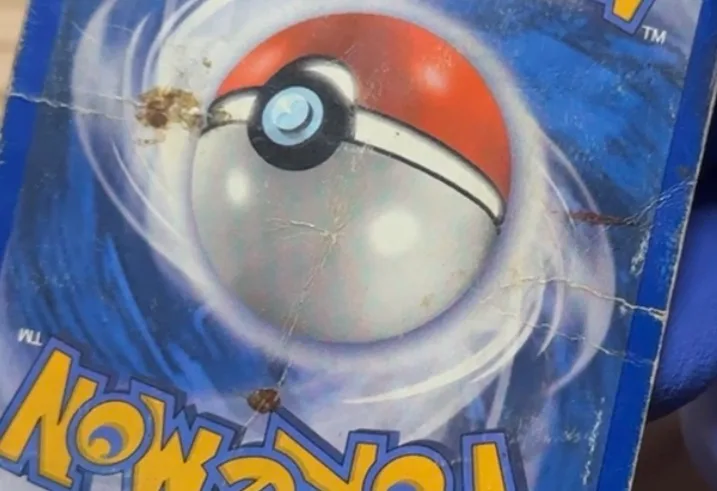
Improvable, requires evaluationA crease is a fold line where the card stock has actually broken. You'll often see a white line on the front where the ink layer cracked. This is the damage people ask about most.
How it happens: the card was bent past its limit. Sat on, mailed in a plain envelope, or folded by a younger sibling in 2003.
Bend
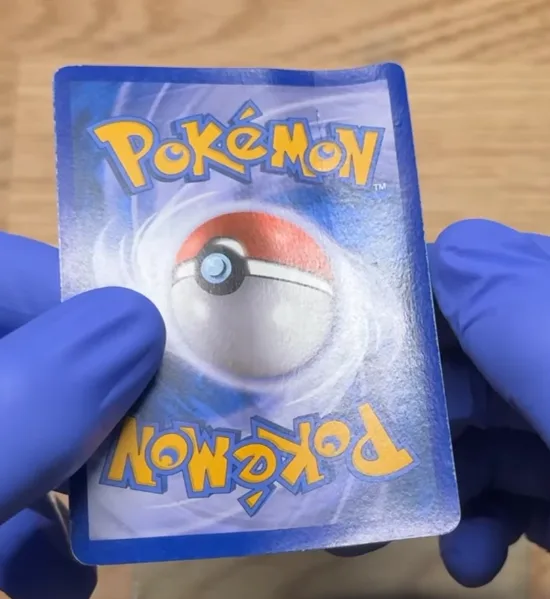
Usually very fixableA bend is a curve or warp in the card without a broken fold line. The card doesn't sit flat, but the stock isn't cracked. Common on cards stored under pressure or in humid environments.
How it happens: humidity swings, tight top-loaders, cards stored leaning or under weight for years.
Scratches
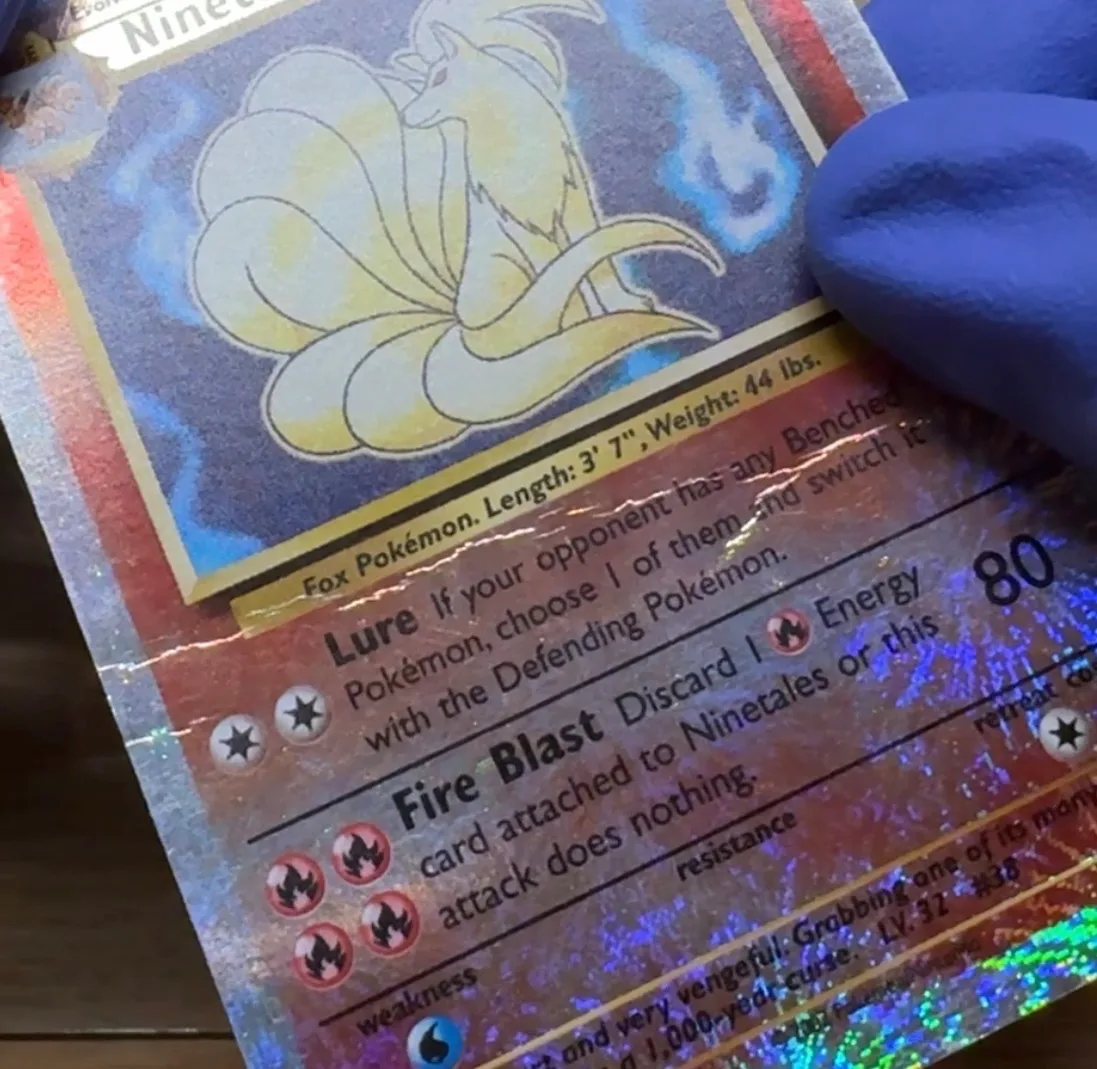
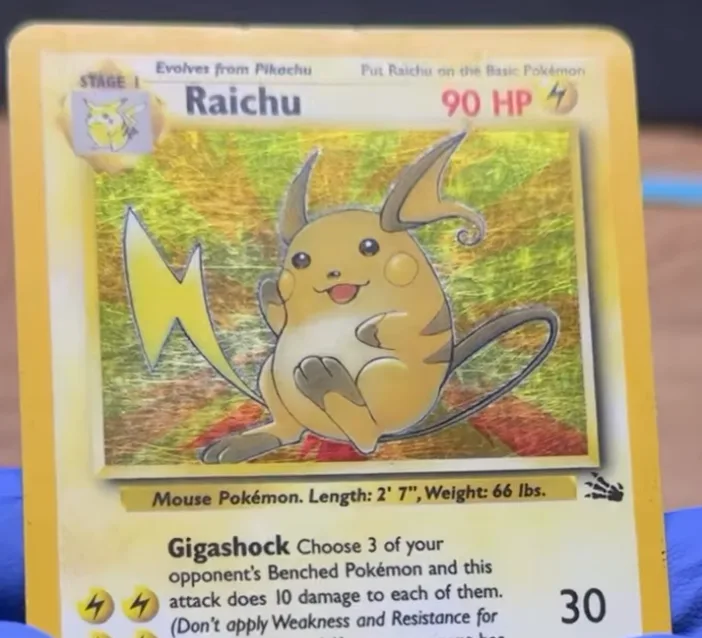
Depends on depthSurface scratches and scuffs on the card's finish, especially visible on holos, where they catch the light and interrupt the pattern. Depth matters: light surface scuffing behaves very differently from a gouge through the ink.
How it happens: sliding cards across tables, dirty sleeves, stacking cards raw, or general play wear.
Indent
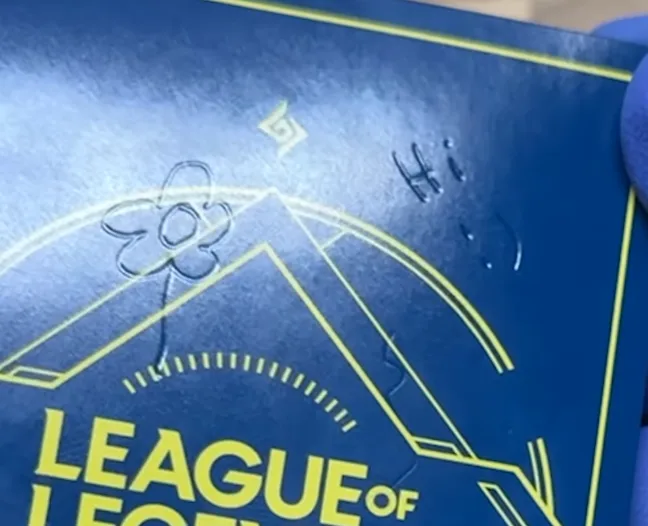
Usually very fixableA pressure mark pressed into the card surface without breaking it: a fingernail moon, a dent from something hard sitting on the card, or lines from a rubber band. Often easiest to see when the card is tilted in the light.
How it happens: pressure from objects, rubber bands, tight stacking, or something hard pressed against the card in a pocket or box.
Cleaning
Usually very fixableDirt, grime, fingerprints, sticker residue, pen marks, wax residue from vintage packs, even light smoke film. Anything sitting on the card rather than damage to the card.
How it happens: decades of storage, handling without sleeves, attic and garage life.
Something else?
Case by caseWater damage, stains, torn corners, writing on the card, previous repair attempts gone wrong. If your damage doesn't fit the categories above, that doesn't mean it's hopeless.
What to do: submit it through the application with "Other" selected and good photos. Every card gets personally reviewed, and you'll get a straight answer about whether it can be helped. And if it can't, you'll be told that too.